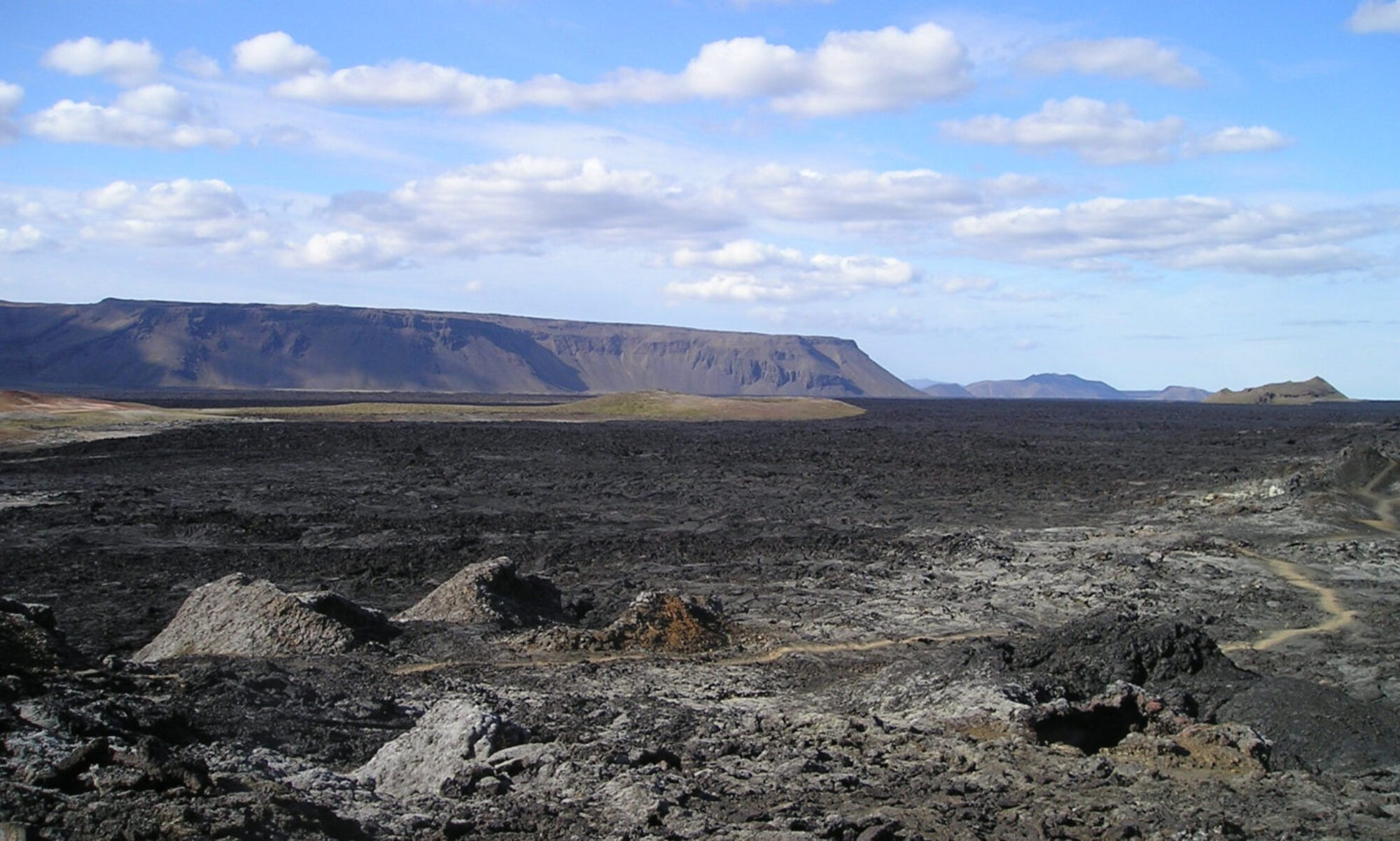
Iceland, Land of Living Volcanoes

Iceland is one of the few places on Earth where the forces beneath the planet can be seen so clearly at the surface. Volcanoes have shaped the island for millions of years, creating vast lava fields, mountains, craters and geothermal areas that have become an essential part of its identity.

The country’s volcanic activity is closely linked to its position on the Mid Atlantic Ridge, where the North American and Eurasian tectonic plates are slowly moving apart. Iceland also lies above a powerful mantle plume, helping explain why volcanic activity is particularly intense. The result is a landscape that remains geologically active today.

Iceland has around 130 volcanic mountains, although only a smaller number are considered active systems. Some have become famous worldwide. Eyjafjallajökull erupted in 2010, sending ash high into the atmosphere and disrupting air travel across Europe. In 2014 and 2015, the Holuhraun eruption produced one of Iceland’s largest lava flows in centuries.

More recently, the Reykjanes Peninsula has returned to the headlines. After centuries of relative quiet, volcanic eruptions began again in the region in 2021, followed by further eruptions near Grindavík from 2023 onward. These events have demonstrated that Iceland’s volcanic landscape is not simply a relic of the past, but a living and changing environment.

For travellers, volcanoes offer some of Iceland’s most striking sights. Visitors can explore ancient lava fields, walk around volcanic craters, observe steaming geothermal landscapes and, where conditions and authorities allow, see the aftermath of recent eruptions.

Volcanism is not merely part of Iceland’s scenery. It is one of the forces that created the country itself, and a reminder that beneath its quiet landscapes, the Earth is still moving.

Iceland, Where Fire Meets Ice

Few countries can match Iceland for sheer natural drama. In the North Atlantic, this remote island brings together glaciers, volcanoes, black sand beaches, waterfalls, steaming geothermal fields and rugged mountains in a landscape that can seem almost otherworldly. The scenery changes constantly, sometimes within a few kilometres, making Iceland a destination for travellers who want nature to be the main event.

The country’s beauty is closely tied to its restless geology. Sitting on the Mid-Atlantic Ridge, Iceland is shaped by volcanic activity and geothermal heat. Huge glaciers cover parts of the interior, while hot springs and geysers bubble beneath the surface. In the south, visitors can admire the powerful Gullfoss waterfall, the eruptions of Strokkur geyser and the black sands of Reynisfjara. Further east, the Jökulsárlón glacier lagoon offers the extraordinary sight of icebergs drifting toward the sea. In winter, the Northern Lights can add another spectacle, appearing in dark skies from late August to late April.

Iceland is also a place where history feels unusually close. Permanent Norse settlement traditionally dates to 874, when Ingólfur Arnarson established his farm in the area of modern Reykjavík. In 930, Iceland’s settlers founded the Alþingi at Þingvellir, creating one of the world’s oldest parliamentary institutions. Around the year 1000, Christianity was adopted through a decision made at the assembly. Centuries of Norwegian and Danish rule followed, before Iceland became a sovereign kingdom in 1918 and established its present republic on June 17, 1944.

For visitors, the country offers more than spectacular views. Reykjavík provides museums, cafés, restaurants and a lively cultural scene, while the countryside invites exploration by car, on foot or by boat. Travellers can bathe in geothermal waters, explore lava fields, visit glaciers, watch whales, discover remote fishing villages or simply stop beside a waterfall with no city in sight.

That combination is Iceland’s greatest attraction. It is a country where ancient history, powerful natural forces and modern Nordic life exist side by side, creating an experience that feels both peaceful and unforgettable.