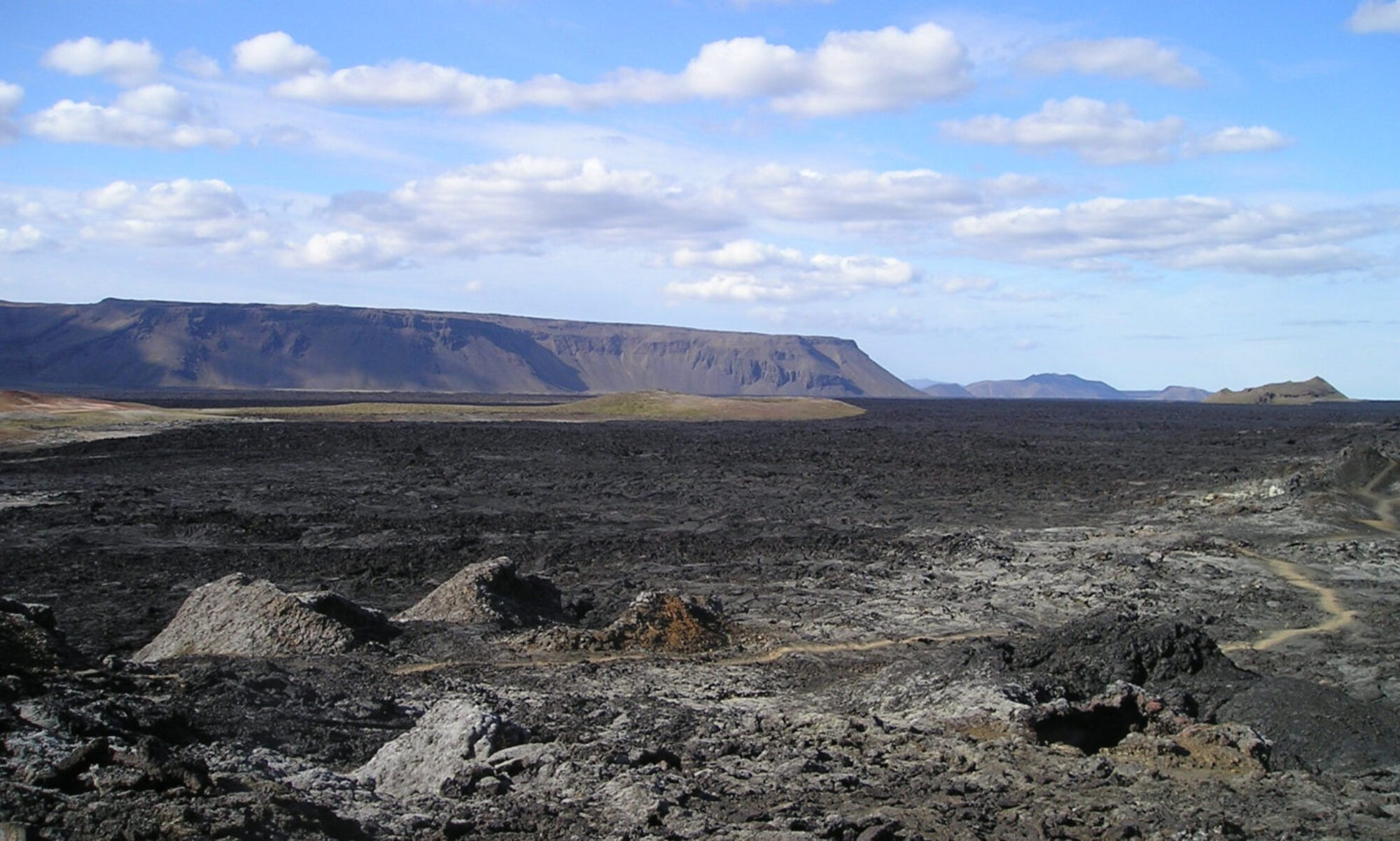
Iceland is one of the few places on Earth where the forces beneath the planet can be seen so clearly at the surface. Volcanoes have shaped the island for millions of years, creating vast lava fields, mountains, craters and geothermal areas that have become an essential part of its identity.
The country’s volcanic activity is closely linked to its position on the Mid Atlantic Ridge, where the North American and Eurasian tectonic plates are slowly moving apart. Iceland also lies above a powerful mantle plume, helping explain why volcanic activity is particularly intense. The result is a landscape that remains geologically active today.
Iceland has around 130 volcanic mountains, although only a smaller number are considered active systems. Some have become famous worldwide. Eyjafjallajökull erupted in 2010, sending ash high into the atmosphere and disrupting air travel across Europe. In 2014 and 2015, the Holuhraun eruption produced one of Iceland’s largest lava flows in centuries.
More recently, the Reykjanes Peninsula has returned to the headlines. After centuries of relative quiet, volcanic eruptions began again in the region in 2021, followed by further eruptions near Grindavík from 2023 onward. These events have demonstrated that Iceland’s volcanic landscape is not simply a relic of the past, but a living and changing environment.
For travellers, volcanoes offer some of Iceland’s most striking sights. Visitors can explore ancient lava fields, walk around volcanic craters, observe steaming geothermal landscapes and, where conditions and authorities allow, see the aftermath of recent eruptions.
Volcanism is not merely part of Iceland’s scenery. It is one of the forces that created the country itself, and a reminder that beneath its quiet landscapes, the Earth is still moving.